The Pleasures of Amateurism
Dear Friends and Family,
I would like to tell you about the enclosed album, and why it means so much to me. My hope is that you will find the time to listen to it, even just once, and know something about the journey that brought me here.
No CD player? All songs are available at For The Love Of It.
I’ve never been much of a self-promoter. In fact, I’ve always been a little uncomfortable asking friends to come hear us play, particularly when it means driving through Seattle on a dark, rainy winter night, finding parking, and spending money to listen to the band. But this album is different. It represents something deeply satisfying in my life, something that has taken many decades to come together.
Music was the great passion of my adolescence. During junior high and high school, it consumed me. And although adulthood brought a career, a family, and all the other preoccupations of life, music never really went away. I played guitar, took piano lessons, and listened endlessly. But somewhere in the back of my mind was a persistent feeling that I had left something important unexplored. I believed I might have the ability to make music with really good musicians, but I had never quite given myself the chance to find out.
About twenty years ago, I began practicing guitar more seriously. And thirteen years ago, through a combination of persistence, good fortune, and the generosity of others, I found myself playing with a very good group of musicians.
Jeff, our drummer, and Rick, our bass player, have spent their lives as professional musicians. Paul (piano), Cherrie (vocals), and Clif (trombone) are accomplished performers and music educators. Every one of them is in some way more experienced and technically proficient than I am. And something wonderful happened. I discovered that I could play with them. Not always brilliantly, and certainly not without mistakes, but with enough musical understanding, sensitivity, and imagination to contribute something of my own.
For years, I’ve been fond of a little phrase: “the pleasures of amateurism.” I think the phrase captures something important about the life of an artist, particularly one who has spent most of his working years doing something else. An amateur, in the original sense, is someone who does something for the love of it.
There’s a tendency in the musical world, especially in jazz, to place enormous value on technical accomplishment. Years of formal study, fluency in music theory, dazzling improvisational skills, and mastery of an instrument can become the measures of a musician’s worth. These are wonderful accomplishments, and I admire them. But I’ve come to believe that they are not the whole story and can in fact get in the way of something deeper.
There’s another quality in music that is harder to define. Call it artistic sensibility, or taste, or simply the ability to listen deeply and respond to what the other musicians are doing. It’s knowing when to play and when not to play. It’s finding a few notes that say something meaningful rather than a hundred notes that demonstrate how much you know.
And when I’m playing at my best, I sometimes feel that I’ve found my way into that place. This has been one of the great discoveries of my later life: that you can come to something relatively late, without all the credentials or years of professional experience, and still participate in it meaningfully. You can belong. You can make something beautiful with other people.
And that’s what brings me to the Forman-Finley Band. Over these thirteen years, we’ve become much more than five people who get together to play music. We’ve developed a shared musical language, a way of listening and responding to one another that only comes with time, trust, and friendship. We play music that might loosely be called jazz, but draws on blues, folk, popular song, and whatever else moves us. We don’t feel particularly constrained by categories.
We’ve also been fortunate to find a small but loyal audience in Seattle. We play regularly at several intimate venues, and often fill the room. There’s something especially gratifying about looking out and seeing people who have come back again and again, not because we’re famous or fashionable, but because they enjoy the music we make together.
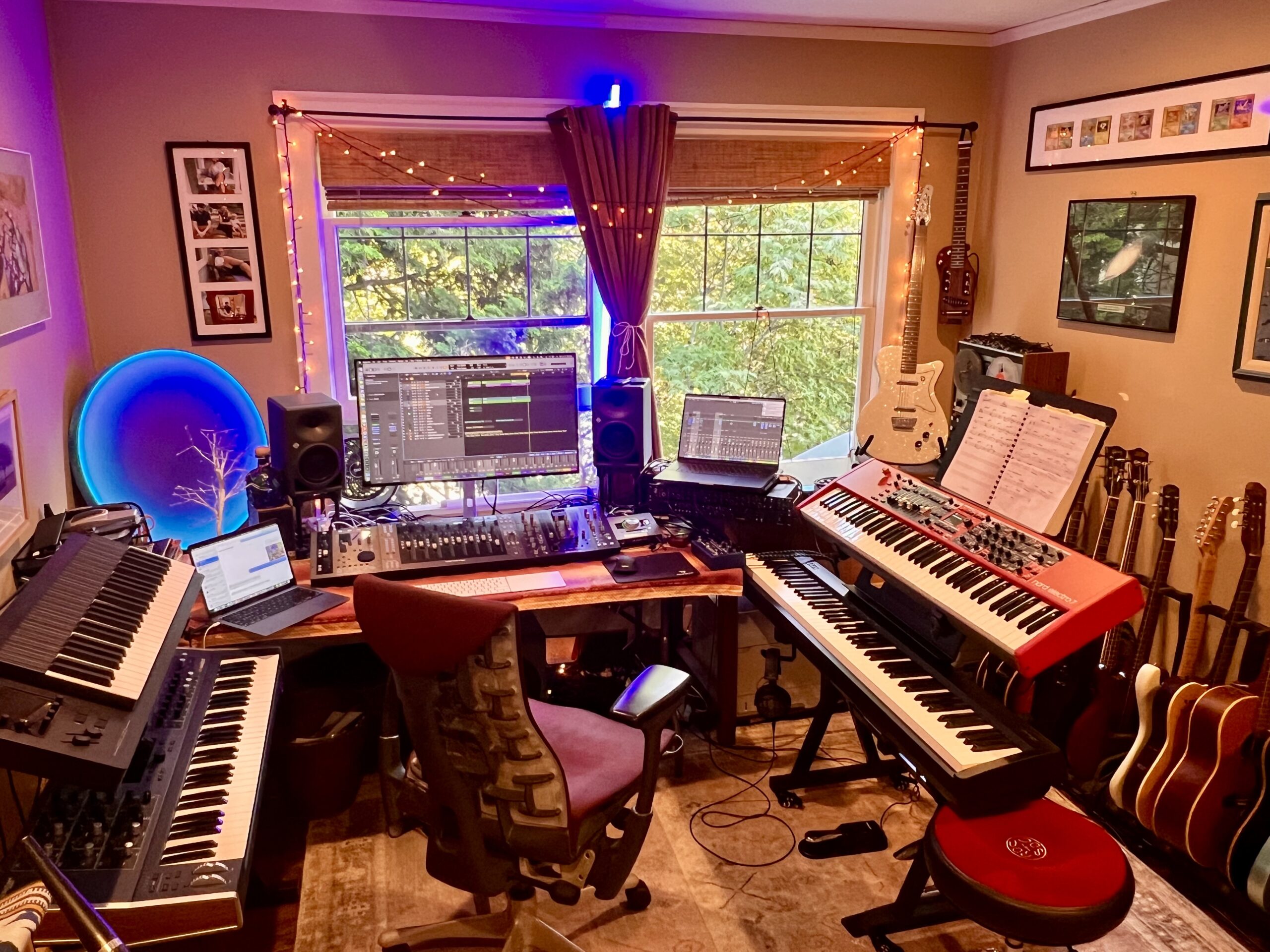
A couple of years ago, after retiring, I decided to explore another side of music: the world of recording and audio engineering. Technology has advanced to the point where an ordinary person with sufficient curiosity and patience can build a capable recording studio at home. So that’s what I’ve done. Learning this world of microphones, recording software, sound processing, and mixing has been an adventure in itself. It’s a fascinating combination of engineering and art. On this album, for example, I recorded a number of guitar passages in my home studio to replace sections from our original band recordings. I then sent those recordings to the larger studio where we had recorded together. The technical accomplishment of making all of this work, and the artistic satisfaction of hearing the finished result, have been really rewarding.
So here I am, in my seventies, still learning, still practicing, still discovering things about music that I didn’t know a year ago. And, perhaps most importantly, still enjoying the remarkable privilege of making music with people I admire and love. This album is not a commercial venture, nor is it an attempt to establish some kind of musical legacy. It’s simply a record of something that has brought me happiness. It represents years of effort, friendship, curiosity, and the particular joy of discovering that something you loved when you were young can become even more meaningful when you’re old.
I hope you’ll give the album a listen. And when you do, I hope you’ll hear not just the music, but something of the friendship, affection, and shared pleasure that went into making it.
Warmly,
Steve